
Heated Towel Rack Specification Guide for Hospitality and Multi-Unit Projects
Hospitality and multi-unit projects usually need a different level of consistency and planning discipline than one-off residential selections.
The right answer is often not just about which collection looks strongest in isolation. It is about which collection, installation type, control setup, and finish can be specified clearly and repeated reliably across the project.

What Changes In Hospitality And Multi-Unit Work
Repetition Matters
The specification often needs to work across multiple rooms rather than one highly customized setting.
That makes it more important to confirm:
- Repeatable installation conditions
- Consistent voltage assumptions
- Finish consistency
- Controller setup that will be easy to support across rooms
Simplicity Often Has More Value
A solution that is easy to understand, document, and repeat often carries more practical value than a highly customized specification that introduces unnecessary complexity.
Room Types May Still Vary
Not every guest room, suite, or residence type has to use the same rack, but the differences should be intentional rather than accidental.
Collection Planning Questions
Is the project leaning classic, decorative, or modern?
This usually separates:
- Jeeves
- Traditional
- The Italian modern family: Quadro, Sirio, Antus, Vega
- Modello i
- Combo-install families like Cape and Radiant
Does the project need installation flexibility?
If yes, Cape and Radiant may become more relevant.
Is a freestanding answer ever needed?
If yes, Solo enters the discussion differently from the wall-mounted collections.
Specification Risks To Address Early
Voltage Assumptions
If 220V is required, that should be stated early and clearly.
Control Assumptions
Not every family follows the same control setup. Some projects are better served by external switch or timer planning, while others may be aligning around families that support TDHC or TDHCR.
Finish Assumptions
If a specialty finish is required, it should be checked against the correct eligible collections before documentation starts to spread.
Electrical Orientation
If left-side electrical matters, confirm it early. Do not assume every collection solves that the same way.
When Standardization Helps
Standardization is often helpful when the installation needs:
- Easier documentation
- More predictable field execution
- Cleaner replacement planning over time
- More consistent room-to-room experience
That does not mean every room must use the same collection. It means the differences should be controlled and intentional.
Before the specification is finalized, the project should have clear answers on collection, model size and specifications, installation type, control compatibility, finish eligibility, voltage requirements, wet-area conditions if relevant, and alignment between the specified model and the correct technical drawing and installation guide.
Specification Product Examples
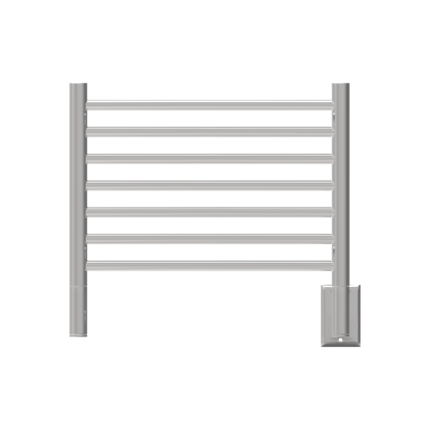
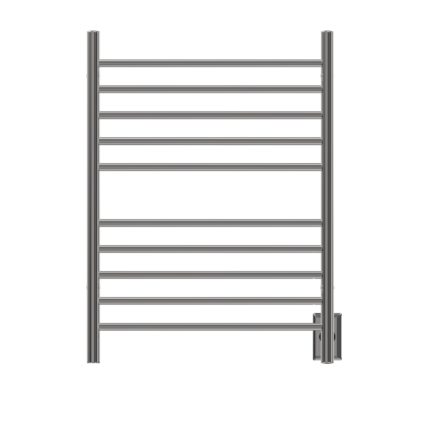
Hospitality and multi-unit projects often compare repeatable hardwired models, flexible combo-install models, and contemporary collections with controller support.