
Left-Side Electrical Planning for Heated Towel Racks
Left-side electrical planning is easy to miss early and frustrating to correct late. A project can reach the installation stage with the right collection, the right size, and the right wall location, then still run into avoidable trouble because the electrical feed is on the wrong side.
The good news is that this can usually be managed well when it is checked before order placement and before rough-in is treated as final.
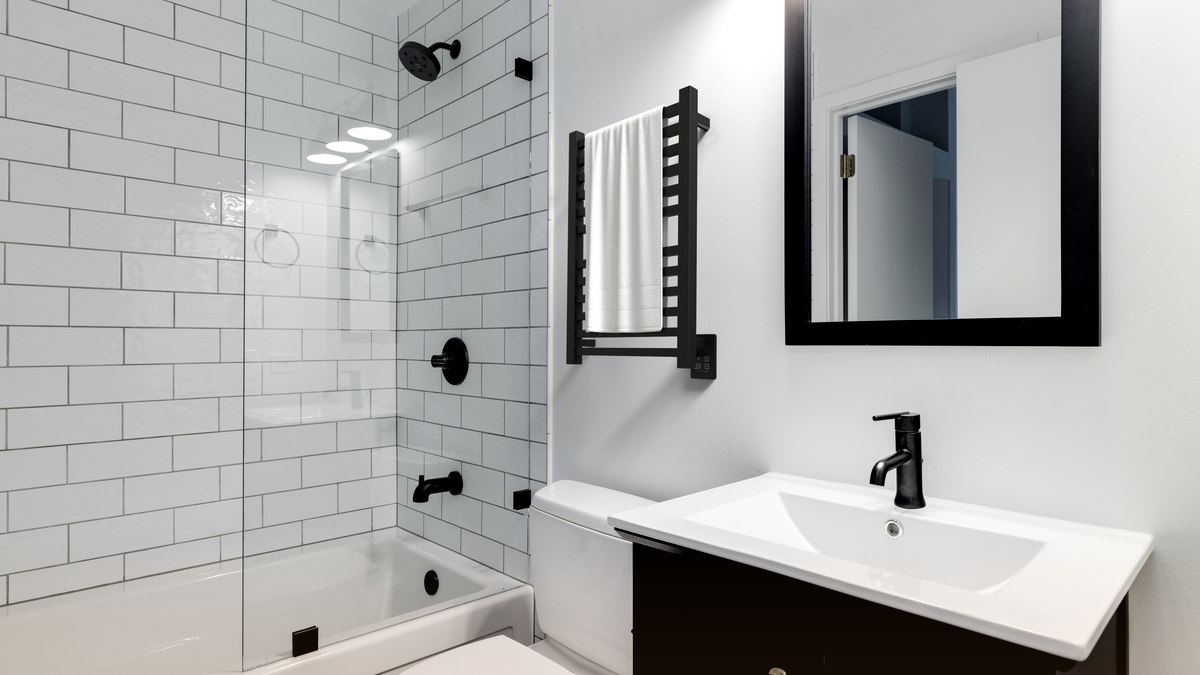
Left-Side Electrical Availability
Do not assume every heated towel rack can accept a left-side electrical feed the same way.
The answer depends on the collection.
Some collections:
- Offer a left-side or left-electrical solution directly
- Support it only as a special-order option
- Can achieve the needed orientation by rotating the rack 180 degrees where function is unaffected
- Should not be flipped or treated as orientation-flexible at all
Collection-Level Guidance
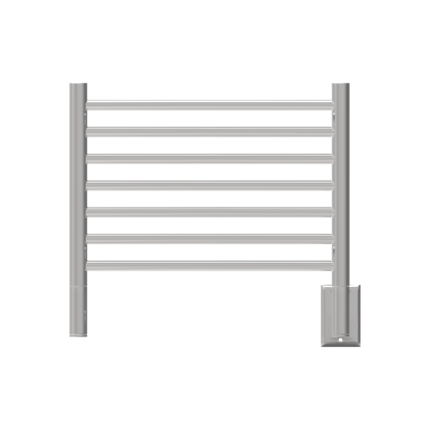
Jeeves can be ordered with left-side wiring for a fee. That modification is handled in-house before shipment.
This is not the same as casually reversing the install in the field. It should be planned as part of the order.
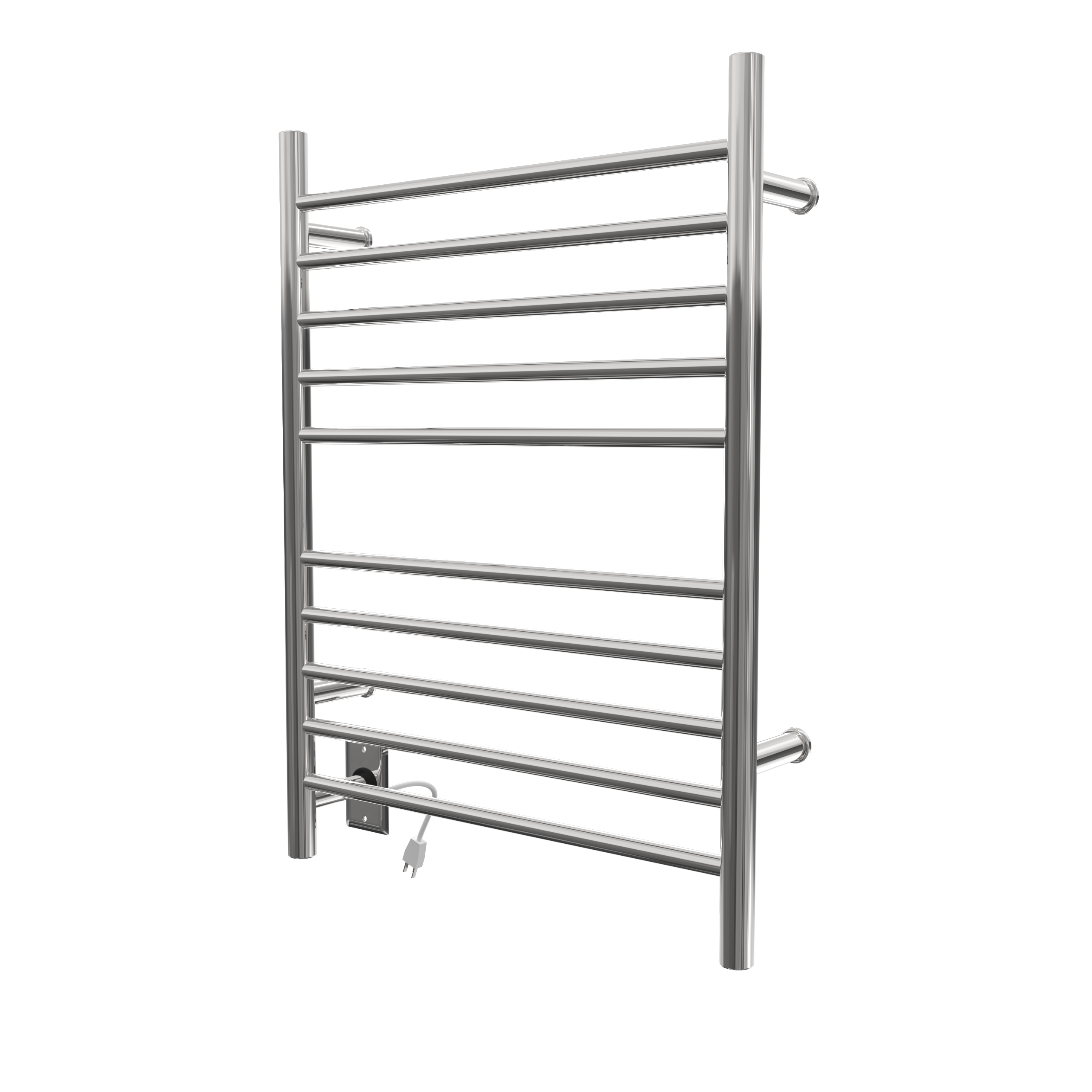
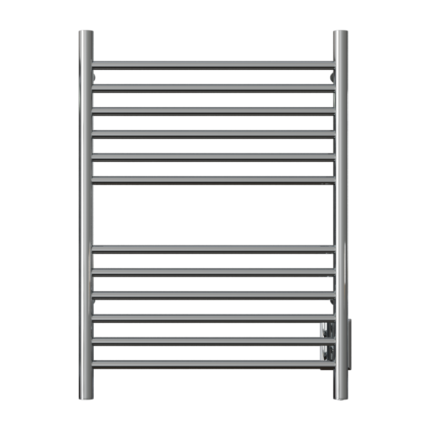
Radiant includes a left-electrical setup on specific stock SKUs for the standard-size RWH model in polished stainless and matte black.
That means left-side planning is possible here, but it should still be confirmed against the exact SKU rather than assumed broadly across every Radiant model.
These collections can be made left-electrical only as a special-order condition.
If the project depends on left-side power on one of these families, that should be treated as an ordering decision, not as a casual install-time adjustment.
These dry-element families can often solve a left-side condition by being installed rotated 180 degrees so the electrical lands at the top left without affecting function.
That is not the same as saying every orientation is interchangeable. It means the project may have a workable option where the collection allows it.
These should not be treated the same way. Because of the liquid-filled system, they should not simply be flipped upside down to solve a wiring-side problem.
Rotation Is Not the Same as Reversing Every Model
One of the most important clarifications is that a collection being able to rotate 180 degrees does not mean every rack can be installed in any orientation.
The safe approach is:
- Confirm whether the collection supports rotation without affecting function
- Confirm whether a left-side electrical need can be solved by a qualifying rotated install
- Confirm whether the collection instead requires a true special-order left-electrical solution
Questions to Confirm Before Rough-In
What is the exact collection
What is the exact model or SKU
Where is the electrical feed coming from
Is the project expecting a standard wiring side or a left-side condition
Can the collection solve that by rotation
Does it require a special-order left-electrical setup
Does the selected solution affect lead time or cost
When This Should Be Decided
Ideally, before:
- Final order placement
- Electrical rough-in
- Tile or wall finish completion
This is not a detail that should be discovered during final mounting if it can be avoided.
Common Mistake to Avoid
The most common mistake is assuming that a left-side feed can always be “worked around later.” Sometimes it can. Sometimes it cannot. Sometimes it changes the collection choice or turns into a special-order condition.
That is why the wiring side should be treated as a real specification and planning question rather than a field improvisation question.
Left-Side Electrical Product Examples
Left-side planning usually starts with products that already support the needed wiring side, orientation, or special-order review.