

Guides d'achat
Comment choisir la bonne taille de porte-serviettes chauffant pour votre salle de bain
De nombreux malentendus sur les porte-serviettes chauffants proviennent d'un problème de base : le résultat attendu n'est pas toujours le même que le but réel du produit.
Un porte-serviettes chauffant est conçu pour réchauffer les serviettes plus confortablement, les aider à sécher plus efficacement entre les utilisations et ajouter du confort quotidien à la pièce. Il ne doit pas être jugé automatiquement comme s'il s'agissait d'un sèche-linge ou d'un radiateur d'appoint à haut rendement.
Établissez d'abord la bonne attente
L'objectif habituel est une serviette plus confortable, un meilleur support de séchage au quotidien, moins de temps de serviette humide entre les utilisations et une routine de salle de bain plus fluide. L'objectif n'est pas nécessairement la sensation exacte d'une serviette tout juste sortie d'un sèche-linge, une chaleur uniforme sur chaque centimètre d'une serviette épaisse pliée, ou un chauffage de toute la pièce à partir du porte-serviettes seul.
Cette distinction est importante car un appareil peut fonctionner normalement même si l'attente était trop ambitieuse.
Pourquoi les serviettes ne sont pas toujours uniformément chaudes
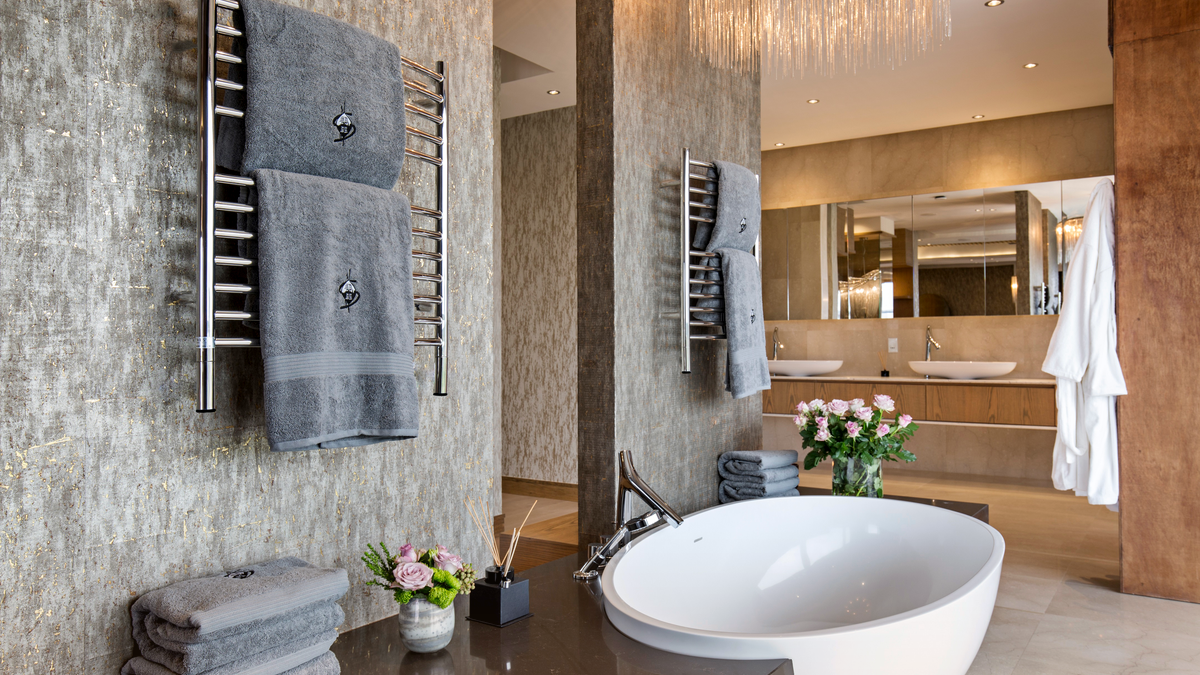
Les barres créent le réchauffement le plus direct là où la serviette les touche réellement. Les zones qui sont pliées, suspendues loin des barres, ou superposées trop épais peuvent sembler plus froides que les points de contact. Cela ne signifie pas automatiquement que l'appareil sous-performe. Cela signifie souvent que la serviette est grande, épaisse, ou disposée d'une manière qui réduit le contact.
Qu'est-ce qui modifie le plus le résultat
L'épaisseur de la serviette, la taille de la serviette, la surface de contact, la durée de fonctionnement, la taille de l'appareil, la température ambiante, l'humidité et le roulement répété des serviettes affectent tous la sensation de chaleur et de séchage dans l'utilisation quotidienne.
Les serviettes épaisses et les draps de bain prennent généralement plus de temps à chauffer et à sécher que les serviettes légères. Une serviette qui entre en meilleur contact avec les barres chauffantes est généralement plus perceptiblement chaude. Un appareil a également besoin d'un temps de fonctionnement suffisant pour faire son travail. Les temps de fonctionnement courts produisent souvent des résultats plus faibles que ce dont le produit est capable.
Si un appareil compact contient un grand drap de bain, la serviette peut ne pas chauffer aussi uniformément que sur un modèle plus grand avec une plus grande surface de contact utilisable. Dans les salles de bain plus froides ou plus humides, ou dans les pièces où les serviettes sont réutilisées, le résultat peut être différent.
Le support de séchage est aussi important que la chaleur
Le confort est souvent la première chose que les gens remarquent, mais le support de séchage est tout aussi important. Un porte-serviettes chauffant peut aider à réduire l'humidité persistante et faciliter la préparation des serviettes pour la prochaine utilisation. Ce bénéfice devient souvent plus perceptible avec le temps qu'un moment spectaculaire de premier contact, en particulier dans les salles de bain principales, les salles de bain familiales, les espaces adjacents à la buanderie et les pièces où les serviettes sont réutilisées régulièrement.
Comment obtenir de meilleurs résultats
Si une minuterie ou un contrôleur fait partie du plan, il est souvent utile de faire fonctionner l'appareil suffisamment tôt pour que la serviette soit déjà en train de chauffer avant d'en avoir besoin. Les modèles compacts fonctionnent généralement mieux lorsqu'ils ne sont pas surchargés, et les draps de bain nécessitent généralement plus de planification que les serviettes standard. Si des serviettes plus grandes et plus lourdes font partie de la routine, un appareil plus grand ou un format de collection différent pourrait être le meilleur choix.
En pratique, la meilleure question n'est généralement pas de savoir si les porte-serviettes chauffants fonctionnent. C'est plutôt de savoir si la taille et le format spécifiques correspondent aux serviettes et à la routine qu'ils sont censés supporter.
Articles connexes
Comment choisir un porte-serviettes chauffant pour draps de bain et plusieurs serviettesComment dois-je plier ou suspendre une serviette pour obtenir le meilleur résultat de réchauffementComment choisir la bonne taille de porte-serviettes chauffantPorte-serviettes chauffants pour salles de bain familiales
Pourquoi c'est plus que du confort
La chaleur est perceptible, mais le séchage est le bénéfice à plus long terme. Dans l'étude sur les serviettes EMSL Analytical d'Amba, le séchage par porte-serviettes chauffant a montré une croissance bactérienne 94 % plus faible que le stockage de serviettes non chauffées dans les conditions testées. Cela fait de l'emplacement de la serviette, de la circulation de l'air et du temps de fonctionnement une partie de la véritable histoire de la performance.